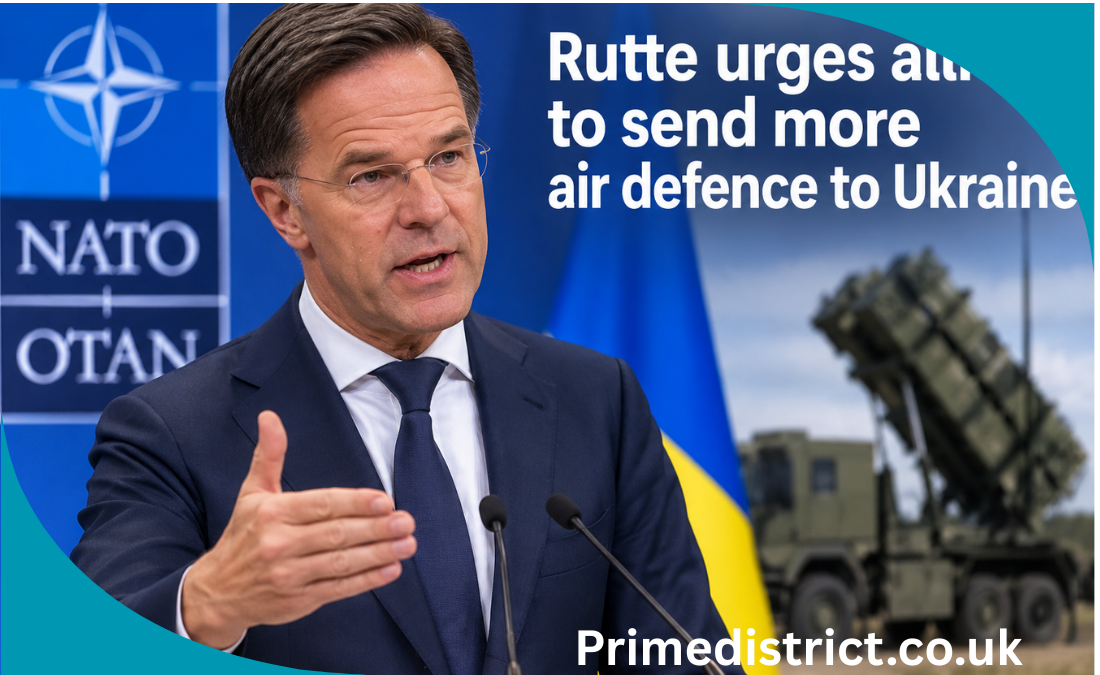
Ukraine’s ability to protect its cities, infrastructure, and civilians remains closely tied to the military support it receives from its international partners. NATO Secretary General Mark Rutte’s call for allies to provide more air defence equipment highlights a central question in the war: how can Ukraine strengthen its protection against aerial attacks while sustaining its wider defence effort?
Why Mark Rutte Is Calling for More Air Defence
Mark Rutte, the former Dutch prime minister who became NATO secretary general in October 2024, has made support for Ukraine an important part of his leadership agenda. His appeal for additional air defence reflects a continuing challenge for Kyiv: defending a large territory against missiles, drones, and other aerial threats requires equipment, ammunition, trained personnel, and a reliable supply network.
Air defence systems can intercept incoming threats before they reach their intended targets. However, protecting military positions, residential areas, power facilities, and transport infrastructure across an entire country is a demanding task.
Rutte’s message to allied governments is therefore about more than delivering individual weapons. It concerns whether NATO members can coordinate their resources quickly enough to help Ukraine respond to continuing attacks.
The precise details of any particular appeal—including its date, the participating governments, and the equipment requested—should be checked against the original NATO statement or a reliable news report. Without that confirmation, it would be misleading to attribute specific demands or promises to Rutte.
Who Is Mark Rutte?
From Dutch Prime Minister to NATO Secretary General
Rutte spent more than a decade as prime minister of the Netherlands before taking over NATO’s top civilian leadership position on October 1, 2024. His experience in European politics and international diplomacy helped prepare him for a role that requires cooperation among countries with different security priorities and defence capabilities.
As secretary general, Rutte represents the alliance publicly, helps coordinate discussions among member states, and works to maintain political unity. He does not independently control the national armed forces or decide what weapons each member country must supply to Ukraine.
That distinction matters when interpreting his calls for additional assistance. NATO’s secretary general can urge governments to act, explain the alliance’s priorities, and build consensus. Decisions about national military aid remain dependent on the relevant governments and their political and logistical arrangements.
Why His Position Matters
NATO brings together countries with different levels of military capacity. Some possess advanced air defence equipment, while others may have more limited inventories or competing requirements for their own armed forces.
Rutte’s challenge is to encourage greater support without overlooking those practical constraints. A public appeal can create political momentum, but turning it into deliveries requires decisions about equipment availability, financing, training, maintenance, and ammunition.
For Ukraine, the difference between a political promise and a functioning defence system can be significant. Equipment must arrive, personnel must know how to operate it, and replacement supplies must remain available when needed.
Why Air Defence Is So Important to Ukraine
Protecting Civilians and Essential Infrastructure
Air defence is a critical part of Ukraine’s effort to limit the damage caused by aerial attacks. Depending on the system involved, it can help intercept aircraft, cruise missiles, ballistic missiles, or drones. No single system can reliably counter every type of threat.
The need for protection extends beyond the battlefield. Electricity networks, water supplies, hospitals, industrial facilities, and transport links all support civilian life and the wider economy.
Damage to these facilities can have consequences long after an attack ends. Restoring electricity or repairing infrastructure may require substantial time and resources, particularly when facilities are targeted repeatedly.
This is why calls for additional air defence often become central to discussions about Ukraine’s resilience. Effective protection can reduce the risk of successful strikes, although it cannot guarantee that every incoming weapon will be intercepted.
Different Threats Require Different Systems
The phrase “air defence” describes a broad range of capabilities rather than one particular weapon. Short-range systems may be suited to certain drones or low-flying threats, while more advanced systems are designed to engage missiles and aircraft at greater distances or altitudes.
Ukraine must also manage the cost of defending against attacks. Using an expensive interceptor against a comparatively inexpensive drone can create difficult decisions about ammunition supplies and long-term sustainability.
A layered defence combines different systems according to the threats they are expected to face. Such an approach can improve coverage, but its effectiveness depends on available equipment, radar coverage, trained operators, and coordination between units.
Consequently, the value of additional assistance depends not only on the number of systems delivered but also on whether they address Ukraine’s most urgent operational needs.
What NATO Allies Can Do to Help
Rutte’s appeal places attention on the practical choices facing allied governments. Countries can contribute through equipment transfers, ammunition supplies, financial support, training, maintenance, and other forms of military assistance.
Existing systems may be particularly valuable when they can be delivered and integrated quickly. However, governments must also consider their own defence requirements and whether replacement equipment will be available.
Some assistance may involve transferring equipment already in service. Other contributions may require new production contracts, which can take longer to fulfil. The distinction between announcing a contribution and completing a delivery is therefore essential when assessing progress.
Coordination also matters. A system delivered without sufficient ammunition, spare parts, or trained personnel may not provide its full intended benefit.
NATO members can discuss these requirements collectively, but each country’s contribution depends on its resources and decisions. Rutte’s appeal should not automatically be interpreted as evidence that every ally has agreed to provide additional equipment.
The Challenges Behind the Appeal
Limited Supplies and Competing Priorities
Advanced air defence equipment is expensive and can take considerable time to manufacture. Production capacity, interceptor availability, and the needs of countries responsible for their own national security can all affect how quickly Ukraine receives additional support.
Governments must weigh immediate assistance against the need to maintain credible defences at home. That tension can make decisions difficult even among countries that support Ukraine politically.
The challenge is not simply whether allies want to help. It is whether they can supply the right capabilities in sufficient quantities and within a useful timeframe.
Political Commitments Versus Actual Deliveries
International military assistance often involves several stages: an announcement, a funding decision, the identification of available equipment, transportation, and operational deployment.
These stages should not be treated as interchangeable. A pledge does not necessarily mean that equipment has reached Ukraine, and a delivery does not automatically establish how much protection it will provide.
For this reason, claims about a specific country agreeing to send a particular air defence system should be supported by an official announcement or reliable reporting. No country should be described as having made a new commitment solely because Rutte has called for more assistance.
What the Appeal Means for Ukraine’s Wider Defence
Air defence is one part of a much larger military effort. Ukraine also needs to sustain its ground forces, maintain equipment, protect supply routes, and secure the resources required for prolonged operations.
Additional defensive systems could help reduce vulnerability to aerial attacks, depending on their capabilities and deployment. They may also help protect infrastructure that supports the country’s economy and civilian population.
However, air defence alone cannot determine the outcome of the war. Its effectiveness depends on the wider military situation, the scale and type of incoming attacks, the availability of ammunition, and the ability to maintain the systems over time.
Rutte’s appeal is best understood within that broader context. It highlights the continuing importance of allied cooperation and the difficulty of translating shared political objectives into timely military support.
What Happens Next?
The most important indicators to watch are concrete commitments, confirmed deliveries, additional ammunition, and improvements in Ukraine’s ability to maintain and operate its systems.
Official NATO communications and statements from individual governments are the most useful starting points for verifying developments. Reliable reporting can provide further detail about what has been promised, when deliveries are expected, and whether particular requests have been met.
The specific outcome of Rutte’s latest appeal cannot be established from the appeal alone. It would be premature to conclude that new systems have been delivered or that all NATO allies have agreed to increase their contributions without supporting evidence.
Conclusion
Mark Rutte’s call for allies to send more air defence to Ukraine underscores the continuing need to protect people and critical infrastructure against aerial attacks. His role as NATO secretary general gives him a platform to encourage collective action, but national governments retain responsibility for their own military assistance decisions.
What is clear is that Ukraine’s defensive needs involve more than obtaining weapons. Equipment, ammunition, training, maintenance, and timely delivery all matter. What remains to be established in any specific appeal is which allies will make additional commitments and how quickly those commitments will translate into operational support.