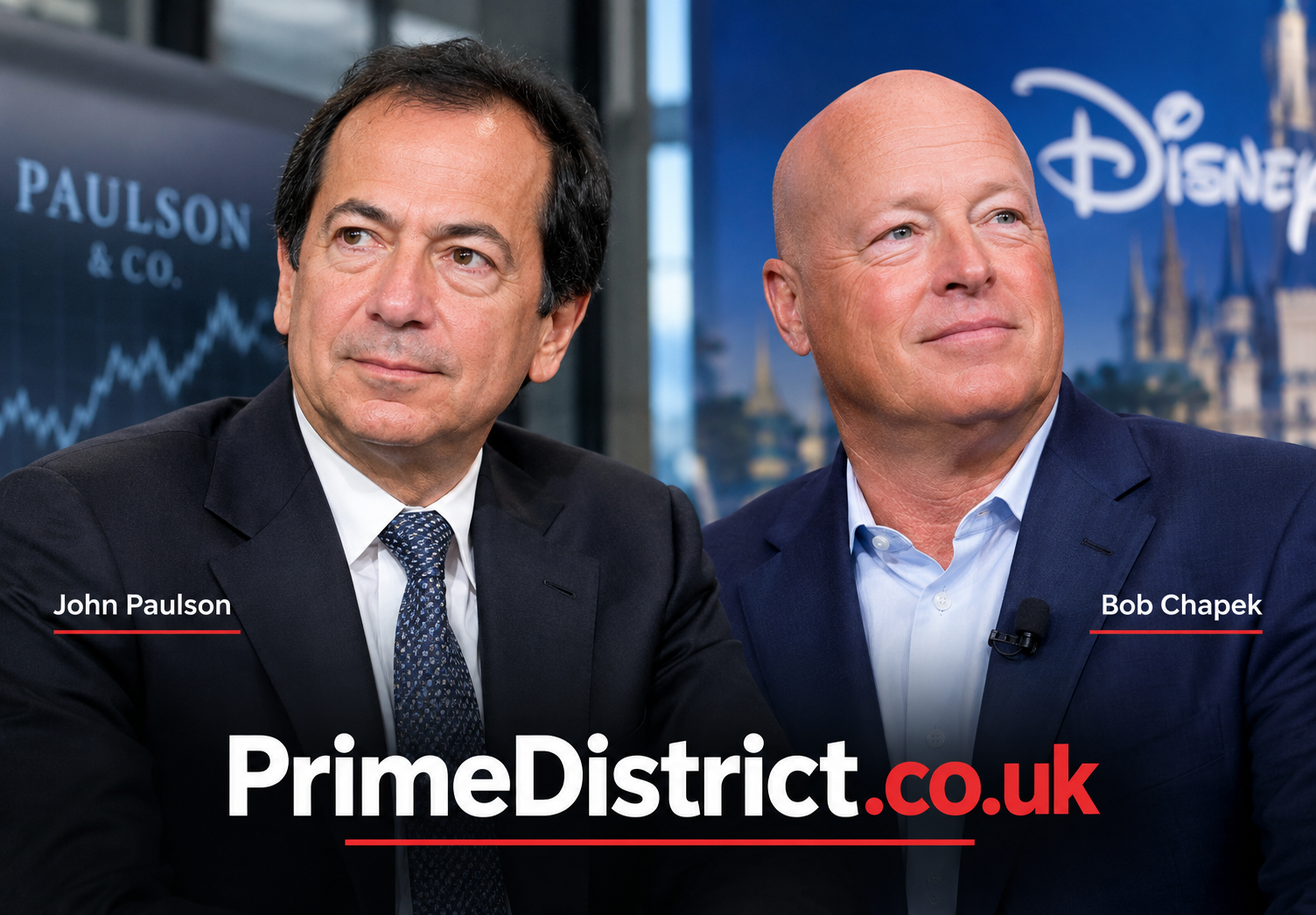
John Paulson and Bob Chapek represent two distinctly different approaches to high-level business leadership. Paulson is best known for his career in investment management and for founding Paulson & Co., while Chapek spent nearly three decades at The Walt Disney Company before becoming its CEO in 2020. Their careers provide an interesting way to explore decision-making, risk management, scalability, technology adoption, and long-term business strategy—principles that also apply to modern cloud architecture.
Who Are John Paulson and Bob Chapek?
John Paulson is an American investor and the founder of Paulson & Co., an investment management firm. His career is closely associated with hedge-fund investing and event-driven investment strategies. He became particularly prominent after making highly publicized bets connected to the U.S. housing and credit markets before the 2008 financial crisis.
Bob Chapek followed a very different professional route. He joined Disney in 1993 and held senior positions across distribution, consumer products, parks, and resorts. Disney appointed him CEO in February 2020, succeeding Bob Iger. At the time, Disney highlighted Chapek’s 27 years of leadership experience across several major business divisions.
The contrast is useful: Paulson’s career centers on capital allocation and investment risk, whereas Chapek’s career developed inside a large global media and entertainment organization.
John Paulson’s Investment-Focused Leadership Model
Paulson’s professional history demonstrates the importance of identifying opportunities where market expectations and underlying conditions may differ. His investment career has involved areas such as event-driven investing, credit, restructuring, and other alternative investment strategies.
From a business architecture perspective, this resembles designing a system around measurable risk rather than simply maximizing activity. An investment manager must evaluate possible outcomes, understand downside exposure, allocate resources selectively, and continually reassess assumptions.
For example, a cloud architect designing a financial platform might similarly separate workloads according to risk. Highly sensitive financial transactions could operate within tightly controlled environments, while less sensitive analytics workloads could use scalable cloud infrastructure.
The broader lesson is that sophisticated decision-making depends on understanding dependencies. A seemingly attractive opportunity can carry hidden risks, just as a cloud application can appear inexpensive until data-transfer charges, security requirements, and operational complexity are considered.
Bob Chapek’s Long Disney Career
Chapek’s career provides a different example of organizational scalability. Before becoming CEO, he worked across multiple Disney businesses, including home entertainment, studio distribution, consumer products, and parks.
Disney’s official biography notes that he became president of Disney Consumer Products in 2011 and later served as chairman of Disney Parks, Experiences and Products. His responsibilities included businesses spanning theme parks, resorts, cruise operations, consumer products, licensing, and retail.
This breadth is important because large organizations operate much like distributed systems. Different divisions have their own processes, technologies, customers, and performance requirements, yet they must ultimately support a shared corporate strategy.
During his parks leadership, Chapek was involved with major developments including Shanghai Disney Resort, Star Wars-themed lands, Marvel-related attractions, and Disney Cruise Line expansion.
John Paulson and Bob Chapek: A Practical Comparison
Although their industries differ substantially, their careers can be examined through several business and technology concepts.
| Area | John Paulson | Bob Chapek |
|---|---|---|
| Primary field | Investment management | Media and entertainment |
| Leadership environment | Capital markets and investment portfolios | Large multinational corporation |
| Core business challenge | Capital allocation and risk management | Managing diverse businesses and digital transformation |
| Professional model | Investment-focused | Corporate executive |
| Scalability challenge | Managing investment strategies and capital | Scaling global consumer and entertainment operations |
| Technology relevance | Financial analytics, data, risk systems | Streaming, digital distribution, personalization and consumer technology |
| Key organizational principle | Risk-adjusted decision-making | Cross-business coordination |
| Career structure | Founder and investment manager | Long-term corporate executive |
The table demonstrates why the two should not be treated as interchangeable business figures. Their responsibilities, industries, and operating environments are fundamentally different.
What Their Careers Teach About Cloud Architecture
Cloud architecture is not simply about moving servers from a company data center to a cloud provider. It involves designing an environment that can withstand changing demand while controlling risk, cost, security, and operational complexity.
The careers of Paulson and Chapek provide two useful conceptual models.
Paulson’s investment background can be compared with risk-oriented architecture. Before deploying a system, architects need to identify failure points, calculate potential consequences, and determine where additional protection is justified.
Chapek’s experience across multiple Disney divisions provides an analogy for distributed enterprise architecture. A large company may operate numerous applications and business units while requiring centralized identity management, security policies, observability, and governance.
In practical terms, an enterprise cloud platform might use separate accounts or subscriptions for different business units while maintaining centralized security monitoring. This creates organizational independence without sacrificing corporate oversight.
Scalability: From Investment Capital to Global Entertainment
Scalability means more than handling more users. It means expanding operations without allowing complexity and costs to grow uncontrollably.
For an investment organization, scalability may involve managing larger portfolios, additional strategies, sophisticated analytics, and more complex regulatory requirements.
For a global entertainment company, scalability can involve enormous content libraries, streaming audiences, digital commerce, physical attractions, mobile applications, and international operations.
A cloud-based entertainment platform, for example, might use content delivery networks to distribute video closer to viewers. Auto-scaling application services can respond to demand spikes, while object storage can hold large media libraries. Databases can be separated according to transactional and analytical workloads.
The architectural objective is straightforward: capacity should expand when demand increases and contract when demand falls.
Security and Risk Management
Security is another area where investment management and cloud architecture share an important principle: risk should be identified before it becomes an operational problem.
A modern cloud environment should typically use identity and access management, encryption, network segmentation, centralized logging, vulnerability management, backup systems, and continuous monitoring.
Financial organizations have particularly strong incentives to protect confidential information and transaction data. Entertainment businesses face their own security challenges, including customer information, intellectual property, payment data, employee accounts, and digital content.
A zero-trust approach can help organizations avoid assuming that a user or device is trustworthy simply because it exists inside a corporate network. Strong authentication and least-privilege access can reduce the potential impact of compromised credentials.
Cost Optimization and Business Efficiency
Cloud architecture must also consider cost. A technically impressive system can still be poorly designed if it creates unnecessary expenses.
For an organization handling financial analytics, cost optimization could involve separating high-performance workloads from less demanding processes and scheduling non-critical computing resources efficiently.
For a global media business, cost management might include intelligent content delivery, storage lifecycle policies, workload optimization, and appropriate use of reserved or committed cloud capacity.
The key principle is matching infrastructure to business value. Organizations should avoid paying premium infrastructure costs for workloads that do not require premium performance.
Digital Transformation and the Importance of Adaptability
Chapek’s Disney career is particularly relevant to digital transformation because several of his executive responsibilities involved changing how Disney products and content reached consumers.
Disney’s announcement about his appointment noted his previous responsibility for content distribution across theatrical exhibition, home entertainment, pay television, digital entertainment, and new media.
During his CEO tenure, Disney continued expanding its direct-to-consumer businesses. In its fiscal 2022 results, Disney reported substantial growth in its direct-to-consumer subscription base.
This illustrates an important technology principle: digital transformation is not simply adopting new software. It can involve changing distribution models, customer experiences, organizational structures, and revenue mechanisms.
Cloud computing often becomes the infrastructure foundation for that transformation because it enables organizations to deploy services globally, analyze large datasets, automate operations, and respond rapidly to changing demand.
Leadership Lessons for Modern Organizations
The careers of John Paulson and Bob Chapek illustrate different approaches to managing complexity.
Paulson’s investment career emphasizes evaluating opportunities, allocating capital, and understanding downside exposure. Chapek’s corporate career demonstrates the challenges of managing interconnected business units within a large global organization.
For technology leaders, the combination suggests a useful framework: understand risk, allocate resources deliberately, build for scale, and continuously reassess assumptions.
A cloud architect can apply the same thinking when designing an enterprise platform. Before selecting a technology, the architect should understand business requirements, regulatory obligations, performance expectations, security risks, and projected growth.
Architecture decisions should ultimately support business objectives rather than technology for its own sake.
Future Trends in Business and Cloud Architecture
The next generation of enterprise infrastructure will increasingly combine cloud computing with automation, advanced analytics, edge computing, machine learning, and stronger cybersecurity controls.
Media organizations are likely to continue requiring highly scalable infrastructure for streaming, personalization, content processing, and global distribution. Financial organizations will continue demanding secure systems capable of processing large datasets and supporting sophisticated analytics.
Hybrid and multicloud architectures may also remain important where organizations need flexibility across providers or must satisfy regulatory and operational requirements.
At the same time, FinOps—the practice of connecting cloud spending with business outcomes—will become increasingly important. Companies will need to understand not only whether their systems work, but whether the infrastructure provides sufficient value for its cost.
Frequently Asked Questions
1. Who is John Paulson?
John Paulson is an American investor and the founder of Paulson & Co., an investment management firm. He is particularly known for his career in hedge-fund investing and his prominent investment positions surrounding the U.S. housing and credit markets.
2. Who is Bob Chapek?
Bob Chapek is a longtime Disney executive who became CEO of The Walt Disney Company in February 2020. Before becoming CEO, he held leadership roles in Disney’s parks, consumer products, and studio distribution businesses.
3. Did John Paulson and Bob Chapek work together?
There is no established professional partnership between Paulson and Chapek comparable to their respective careers. Paulson’s career has centered on investment management, while Chapek’s career was primarily within Disney’s media, entertainment, consumer products, and parks operations.
4. How are their careers relevant to technology?
Their careers illustrate different approaches to managing complexity. Paulson’s investment background highlights risk and capital allocation, while Chapek’s corporate experience highlights organizational scale, digital distribution, and transformation.
5. What can cloud architects learn from these business careers?
Cloud architects can apply several broad principles: evaluate risk before deployment, allocate resources according to business priorities, design for scalability, protect sensitive information, monitor costs, and build systems that can adapt as business requirements change.
Conclusion
John Paulson and Bob Chapek represent two markedly different business paths. Paulson built his reputation in investment management, where capital allocation and risk assessment are central. Chapek developed his career within Disney across several major operating divisions before becoming CEO in 2020.
Their contrasting experiences offer useful lessons beyond finance and entertainment. Modern organizations must balance risk, scalability, security, innovation, and cost—exactly the challenges faced when designing enterprise cloud environments. Whether managing financial capital or digital infrastructure, successful decision-making depends on understanding dependencies, measuring risk, allocating resources carefully, and adapting to changing conditions.